Scrum is one of the most popular frameworks used by teams to work faster, adapt quickly, and deliver better results – especially in tech, product, and design. But if you’re new to it, Scrum can sound like just another buzzword.
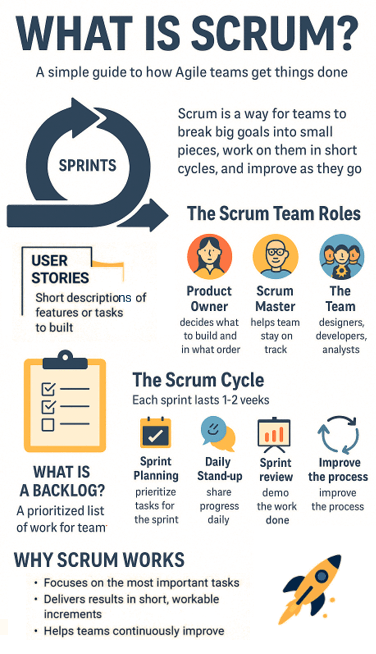
Let’s break it down, in plain language: Scrum is a way for teams to break big goals into small pieces, work on them in short cycles, and improve as they go.
The Core Idea: Work in Sprints
Instead of planning a huge project all at once, Scrum teams work in short timeframes called sprints (usually 1–2 weeks). At the end of each sprint, the team delivers something small but valuable, like a new feature, a fix, or a design update.
This means:
- You get feedback faster
- You waste less time on things people don’t need
- You always know what the team is focused on
The Scrum Team Roles
There are three key roles in Scrum:
Product Owner
→ Decides what the team should build and in what order
→ Keeps the backlog (to-do list) organized
Scrum Master
→ Helps the team stay on track
→ Removes blockers and keeps Scrum running smoothly
The Team
→ Designers, developers, analysts – who do the actual work
The Scrum Cycle: What Happens Each Sprint?
Every sprint follows a regular rhythm:
Sprint Planning : Decide what the team will work on in the next sprint
Daily Stand-Up: A quick 15-minute meeting to share progress and surface blockers
Sprint Work: Heads-down time to build, test, and review the selected tasks
Sprint Review: Demo what was built – get feedback from stakeholders
Sprint Retrospective: Reflect on how the sprint went – what worked, what didn’t, and what to improve next time
What Is a Backlog?
The backlog is a ranked list of everything the team could work on. The Product Owner manages this list and updates it based on feedback and priorities. Before each sprint, the team pulls in the top items from the backlog into their sprint plan.
Why Scrum Works
Scrum is built for change. It helps teams:
- Focus on what matters most right now
- Ship work in small, useful increments
- Learn and adapt quickly, without throwing away months of effort
It’s not just for software, either. Marketing, design, data, and research teams use Scrum to stay aligned and move fast.
Quick Recap
Scrum = short cycles (sprints) + clear roles + continuous feedback.
You plan, build, review, and improve – on repeat.
It’s simple to start, powerful when done well.
🚀 Want to Apply This in Your Work?
If you’re working with data and want to go beyond basic charts and scripts, I offer tailored support to help you build real impact with your insights:
🎓 Personalized Workshops: Hands-on training sessions tailored to your team, tools, and goals
🧠 Consulting Services: Strategic guidance on turning data into decisions – whether it’s modelling, metrics, or storytelling
🕒 Fractional Data Scientist: Embedded support for companies who need senior data expertise without a full-time hire
Whether you’re scaling a product team or building out your first data processes, I can help you use data more effectively, with clarity and confidence.
👉 Get in touch to start a conversation.
 Sofia Afonso
Leave a comment